
What Really Makes Up Body Composition?
A breakdown of the components and measurement basics that define body composition
Introduction
Body composition refers to the proportion of different components that make up the total mass of the human body. Unlike simply looking at total weight, body composition provides insight into what that weight actually consists of—and this distinction is scientifically important.
The Main Components
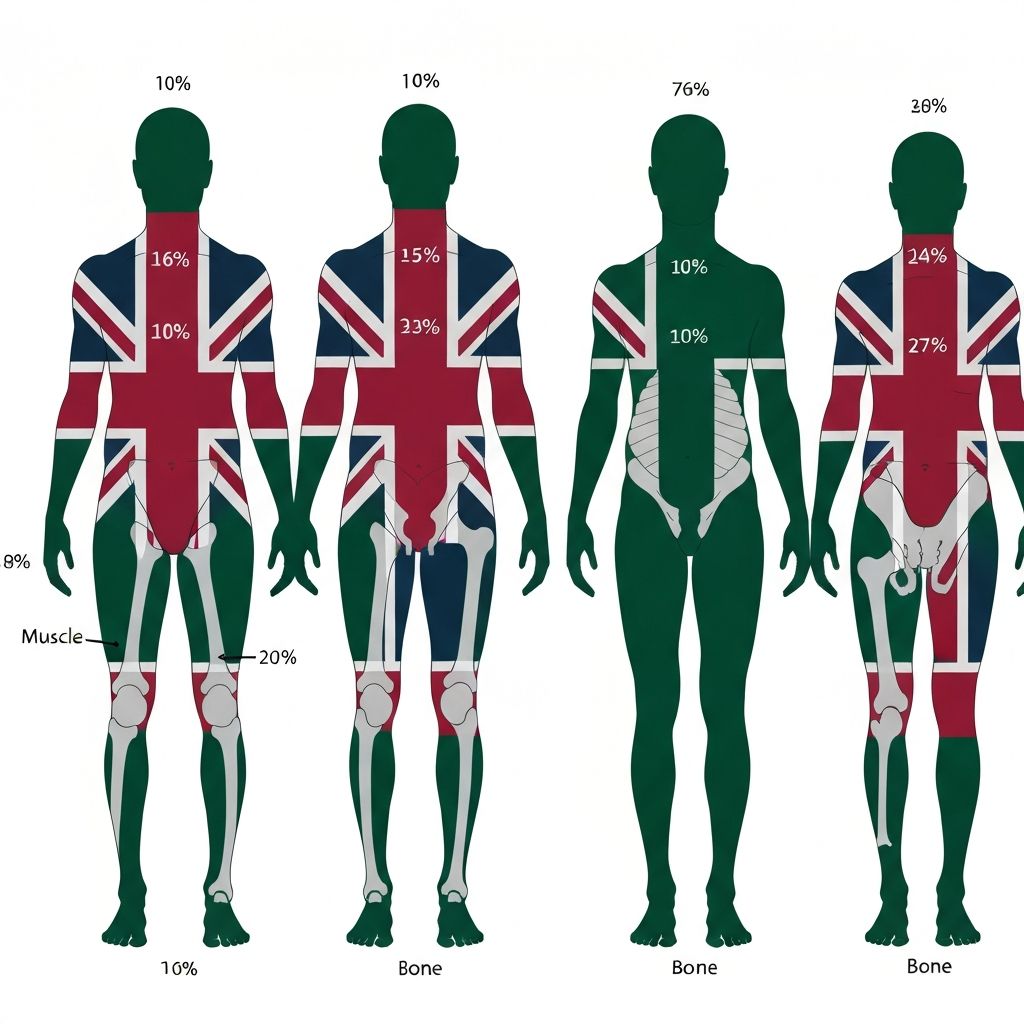
Human body composition typically includes four major components:
Fat mass refers to adipose tissue—cells that store energy as fat. Body fat serves essential functions including energy storage, hormone production, and insulation. Fat is distributed throughout the body, including essential fat (required for organ function) and storage fat.
Lean mass includes everything that is not fat: muscle tissue, organs, connective tissue, and water. Skeletal muscle makes up a significant portion of lean mass and is metabolically active, meaning it burns energy even at rest.
Water comprises approximately 50-60% of body weight and is essential for all biological functions. Water distribution changes daily based on hydration, hormones, and other factors, which is why body composition varies day-to-day.
Bone is a living tissue that stores minerals and supports body structure. Bone density affects overall weight and varies based on age, genetics, nutrition, and physical activity. Stronger, denser bones generally contribute more to total body weight.
Why Body Composition Matters
Two people of the same height and weight can have vastly different body compositions. This is why body composition measurement is sometimes considered more meaningful than weight alone:
- Individual Variation: Genetics, age, and activity level influence body composition differently in each person
- Health Context: Body composition relates to metabolic health and functional fitness, not just appearance
- Measurement Specificity: Body composition tells us what's actually changing, not just the number on a scale
- Metabolic Activity: Lean mass is metabolically active; fat mass is not. Higher lean mass affects energy expenditure
Measurement Methods
Several methods exist to estimate or measure body composition:
DEXA Scan
A dual-energy x-ray absorptiometry scan measures bone mineral density and soft tissue composition with high accuracy. Considered a gold standard in research settings.
Bioelectrical Impedance
Uses electrical current to measure tissue conductivity. Non-invasive and quick, though accuracy depends on hydration status and other factors.
Skinfold Calipers
Measures subcutaneous fat by pinching skin at various body sites. Requires trained technicians but is practical and portable.
Underwater Weighing
Hydrostatic weighing measures body density by weighing in water. Historically accurate but less commonly used today due to logistical requirements.
Key Takeaways
- Body composition describes what body weight actually consists of—not just the number on a scale
- Fat mass, lean mass, water, and bone are the primary components
- Individual body composition varies greatly based on genetics, age, and lifestyle
- Different measurement methods exist, each with different accuracy and practicality
- Understanding body composition provides context that weight alone cannot offer