
Protein Sources and Their Everyday Role
Facts on animal and plant protein sources and their function in daily nutrition
Introduction
Protein is a macronutrient composed of amino acids that plays essential roles in the body. Unlike fats and carbohydrates, the body cannot store excess amino acids, making dietary protein consistently important. Protein comes from diverse sources, both animal and plant-based.
Functions of Protein
Protein serves multiple critical functions in the body:
Muscle tissue is primarily composed of protein. Skeletal muscle, cardiac muscle, and other tissues require protein for their structure and function.
Enzymes are proteins that catalyze biochemical reactions throughout the body, enabling digestion, energy production, and countless other processes.
Many hormones are protein-based, including insulin and growth hormones. These regulate metabolism, appetite, and other bodily functions.
Antibodies and immune system components are proteins that help defend the body against pathogens and maintain immune responses.
Proteins transport oxygen (hemoglobin), fats, vitamins, and minerals throughout the body. They also serve storage functions for iron and other nutrients.
Animal-Based Protein Sources
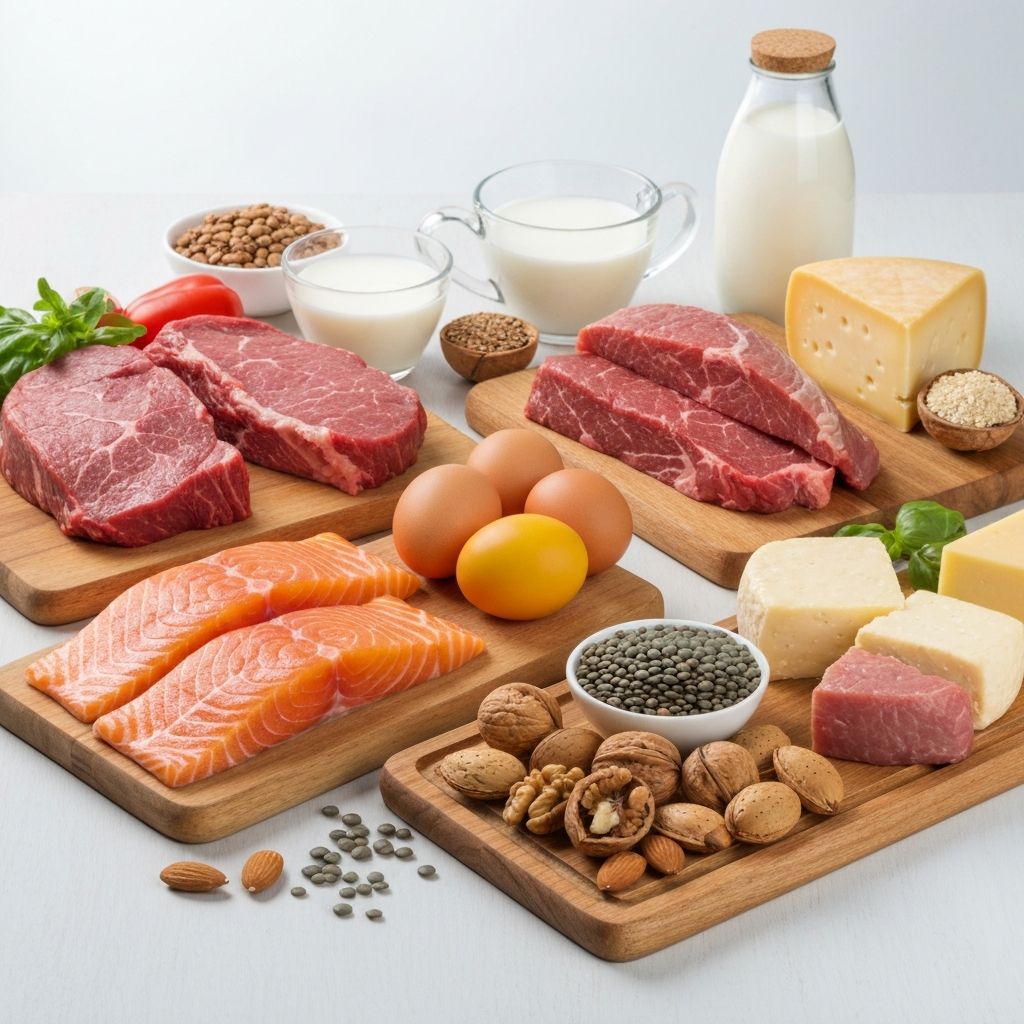
Animal sources provide complete proteins, containing all essential amino acids:
- Meat: Beef, pork, poultry, and lamb are rich in protein and B vitamins
- Fish and Seafood: Salmon, cod, and other fish provide protein plus omega-3 fatty acids
- Eggs: One of the most complete protein sources, containing all amino acids and various nutrients
- Dairy: Milk, yogurt, and cheese provide protein plus calcium and other nutrients
Plant-Based Protein Sources
Plant sources can provide adequate protein, though many are incomplete (lacking some amino acids):
- Legumes: Beans, lentils, and chickpeas are high in protein and fiber
- Nuts and Seeds: Almonds, peanuts, and seeds provide protein plus healthy fats
- Grains: Whole grains like quinoa, oats, and rice contain protein along with carbohydrates
- Soy Products: Tofu, tempeh, and edamame are complete plant proteins with all amino acids
Amino Acids
Protein is composed of amino acids. Of the 20 amino acids found in food, 9 are essential—meaning the body cannot produce them and they must come from diet:
Histidine, Isoleucine, Leucine, Lysine, Methionine, Phenylalanine, Threonine, Tryptophan, Valine
Animal sources typically contain all 9 essential amino acids (complete proteins). Many plant sources lack one or more essential amino acids but can be combined to form complete proteins.
Protein in Daily Nutrition
Protein is essential throughout daily life for muscle maintenance, tissue repair, enzyme function, and countless other processes. Adequate protein intake supports:
- Muscle tissue maintenance and repair
- Satiety (feeling of fullness) due to its effects on appetite hormones
- Immune system function and antibody production
- Wound healing and recovery
- Production of hormones and neurotransmitters
Key Takeaways
- Protein is essential for structure, function, and countless bodily processes
- Animal sources provide complete proteins with all essential amino acids
- Plant sources can provide adequate protein but often require combination
- Diverse protein sources—both animal and plant—can support healthy nutrition
- Individual protein needs vary based on age, activity level, and other factors