The Eatwell Guide Explained
A neutral summary of UK official dietary guidance and the principles underlying the Eatwell Guide
Introduction
The Eatwell Guide is the UK government's framework for healthy eating, developed by the Food Standards Agency (FSA) and Public Health England. It illustrates recommended proportions of different food groups and is designed to help people understand the basics of a balanced diet. The guide is educational and evidence-based, serving as a reference point for nutritional knowledge.
The Five Food Groups
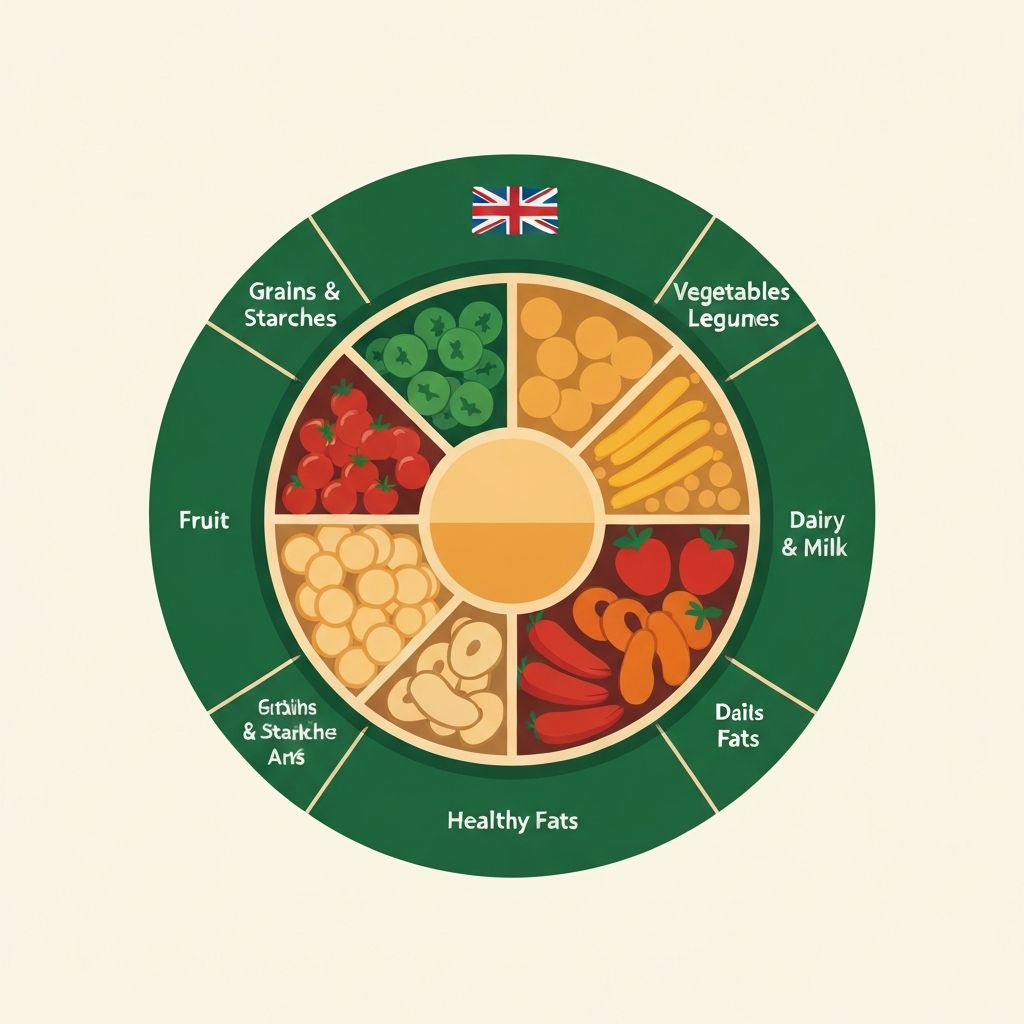
The Eatwell Guide divides foods into five main groups, each represented as a proportion of a plate:
Recommended to make up roughly one-third of the plate. Includes fresh, frozen, canned, and dried fruits and vegetables. Provides fiber, vitamins, minerals, and phytonutrients. Variety is encouraged to maximize nutrient intake.
Recommended to make up roughly one-third of the plate. Includes bread, rice, potatoes, and cereals. Whole grain or higher-fiber options are highlighted as beneficial. Provides energy and B vitamins.
Recommended to make up roughly one-eighth of the plate. Includes meat, fish, eggs, beans, and legumes. Both animal and plant sources are recognized. Essential for muscle maintenance and various bodily functions.
Recommended to make up roughly one-eighth of the plate. Includes milk, cheese, yogurt, and fortified plant-based alternatives. Provides calcium and other nutrients important for bone health.
Recommended in smaller amounts. Includes cooking oils, butter, and spreads. The guide suggests using unsaturated oils and limiting saturated fats, though acknowledges all fats provide energy and some essential nutrients.
Key Principles
The Eatwell Guide is built on several key principles:
- Balance: Different food groups in recommended proportions support nutritional adequacy
- Variety: Consuming diverse foods within each group maximizes nutrient intake
- Moderation: Appropriate portion sizes support healthy energy balance
- Hydration: The guide recommends water as a primary beverage, with limited sugary drinks
- Whole Grains: Emphasizes whole grain options over refined alternatives
Flexibility and Adaptation
The Eatwell Guide acknowledges that individual needs vary. Factors affecting nutritional requirements include:
- Age and developmental stage
- Activity level and occupation
- Health status and medical conditions
- Cultural and personal food preferences
- Dietary choices and restrictions
The guide provides a general framework but is not prescriptive for individuals, which is why professional guidance is recommended for personal dietary decisions.
What the Guide Does Not Do
Important to understand that the Eatwell Guide:
- Is educational and general—not personalized for individuals
- Does not mandate specific portion sizes or calorie intake
- Does not prescribe specific menus or restrict foods
- Does not promise specific health outcomes
- Represents general principles, with flexibility for individual needs
Practical Application
The Eatwell Guide can be used as a reference to understand nutritional principles:
- Learning about proportions of different food groups
- Understanding variety within each group
- Recognizing the importance of whole grains and vegetables
- Appreciating both animal and plant protein sources
- Understanding hydration and limiting sugary beverages
Key Takeaways
- The Eatwell Guide is an educational framework showing food group proportions
- Five main groups are represented: fruits/vegetables, carbs, protein, dairy, oils
- The guide emphasizes balance, variety, and moderation
- It is a general reference, not prescriptive for individuals
- Individual needs vary based on age, activity, health, and preferences